Bell UH-1H Iroquois (Huey Helicopter)
Few aircraft are as instantly recognisable as the Bell UH-1H Iroquois. Known universally as the Huey helicopter. Its thumping rotor blades, sliding side doors and tough silhouette became a symbol of mobility and rapid response from the Vietnam War onwards.
Built for action and trusted in crisis, the Huey Bell was the backbone of battlefield logistics, search and rescue, and medical evacuation missions. Today, a fully restored example stands proudly at the Aviation Heritage Museum in Bull Creek, where it offers visitors a powerful glimpse into an aircraft that defined a generation of Australian service.
History of the Bell UH-1H Iroquois
The UH-1 Huey helicopter was born out of the U.S. Army’s search for a fast, lightweight utility aircraft that could meet the growing demands of Cold War conflicts. Bell Helicopter responded with the first turbine-powered helicopter mass-produced for military use. What followed was the creation of one of the most significant rotary aircraft in aviation history. The UH-1H variant, in particular, offered upgraded engines, extended range, and enhanced reliability, making it the backbone of air mobility for decades.
No conflict shaped the Huey’s reputation more than the Vietnam War. In the dense jungles and remote valleys of Southeast Asia, the UH-1H Huey Vietnam service record was forged in dust and rotor wash. It carried troops into battle, airlifted the wounded to safety and hovered into hostile firezones for daring extractions. Its distinct whooping blades and wide sliding doors became a lifeline.
This legendary performance made the aircraft a natural choice for the Royal Australian Air Force (RAAF). Seeking a proven, all-purpose helicopter that could handle Australia’s vast terrain and varied missions, the RAAF adopted the UH-2H Huey helicopter to fill key roles in transport, medevac, training and disaster relief.
Bell UH-1H Iroquois Role in RAAF Service in Australia
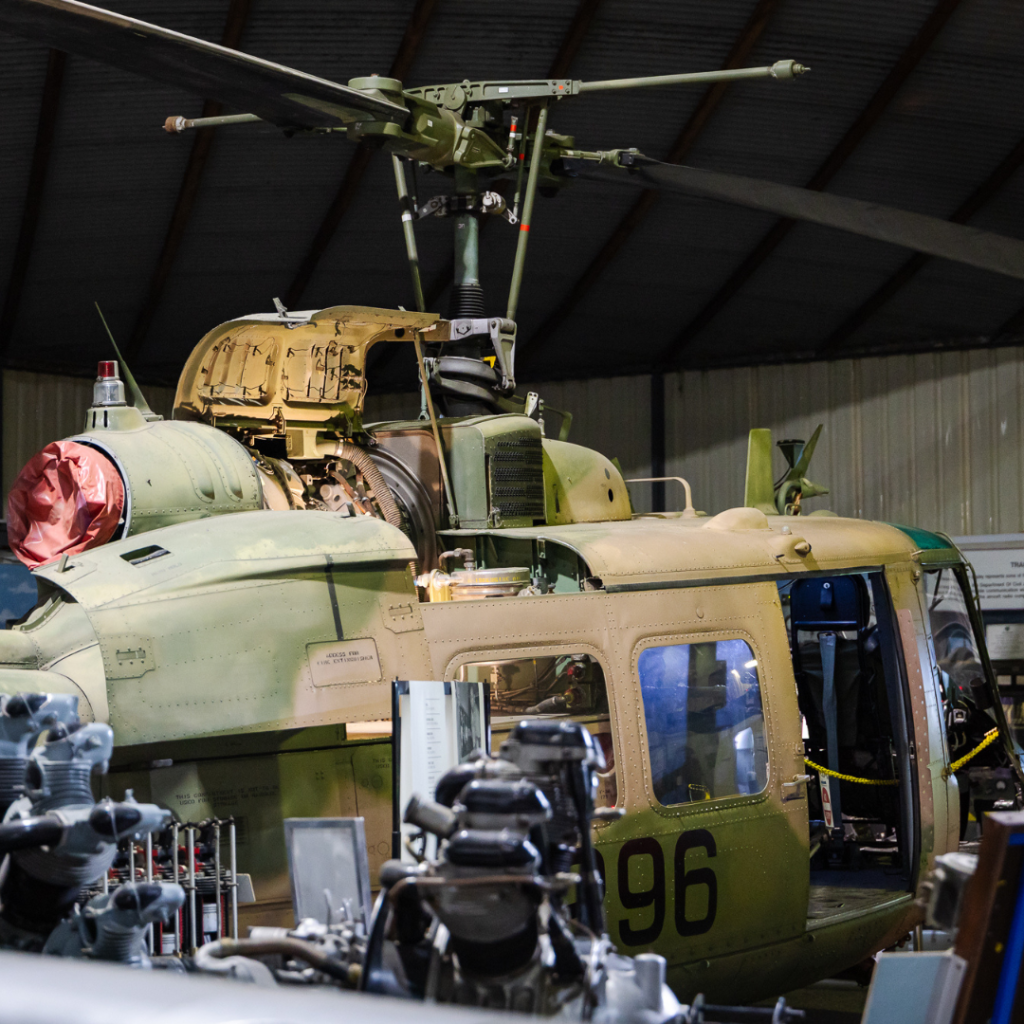
The UH-1 Huey helicopter became a workhorse of Australian defence aviation from the moment it entered service. Delivered to No. 35 Squadron RAAF in Townsville in 1973, the Huey was quickly embedded into local operations — from troop transport and training runs across Queensland’s coast to medical support and logistics missions. By the early 1980s, aircraft like A2-296 were operating out of RAAF Fairbairn in Canberra, supporting Defence personnel across a range of roles.
In 1990, the Army Huey helicopter transitioned to the Australian Army’s 171 Squadron, 1st Aviation Regiment, which was based in Oakey. It then continued its frontline service for over a decade by working on joint training exercises and real-world deployments. A2-296’s journey alone tells the story of national reach — from Queensland to the ACT, then to South Australia’s Edinburgh Air Base, and finally its last flight into Archerfield in 2007 before retirement.
Across almost 40 years of use, the Bell 212 Huey and its UH-1H sibling became critical to everything from bushfire response to tactical exercises. Few aircraft are as tightly woven into Australia’s post-Vietnam military story as the Bell UH-1H Iroquois Huey.
Design and Technical Features
The Bell Huey helicopter was built for reliability, lift and range. Below are the key Bell UH-1H Huey dimensions and specifications for the restored aircraft now on display:
- Status: On display
- Type: Utility helicopter
- Maiden flight: 22 October 1956 (UH-1 series)
- Primary users: RAAF, Australian Army
- Manufacturer: Bell Helicopter Textron (USA)
- Number built: Over 16,000 (UH-1 series total)
- Civil registration: N/A (RAAF service aircraft)
- Length: 17.398 m (57 ft)
- Height: 4.395 m (14 ft)
- Rotor diameter: 14.630 m (48 ft)
- Powerplant: Lycoming T53-L-13 engine
- Empty weight: 2,365.52 kg (5,215 lbs)
- Loaded weight: 4,100.54 kg (9,040 lbs)
- Maximum speed: 217.2 km/h
- Huey Helicopter Range: 506.8 km (315 miles)
Explore the Bell UH-1H Iroquois
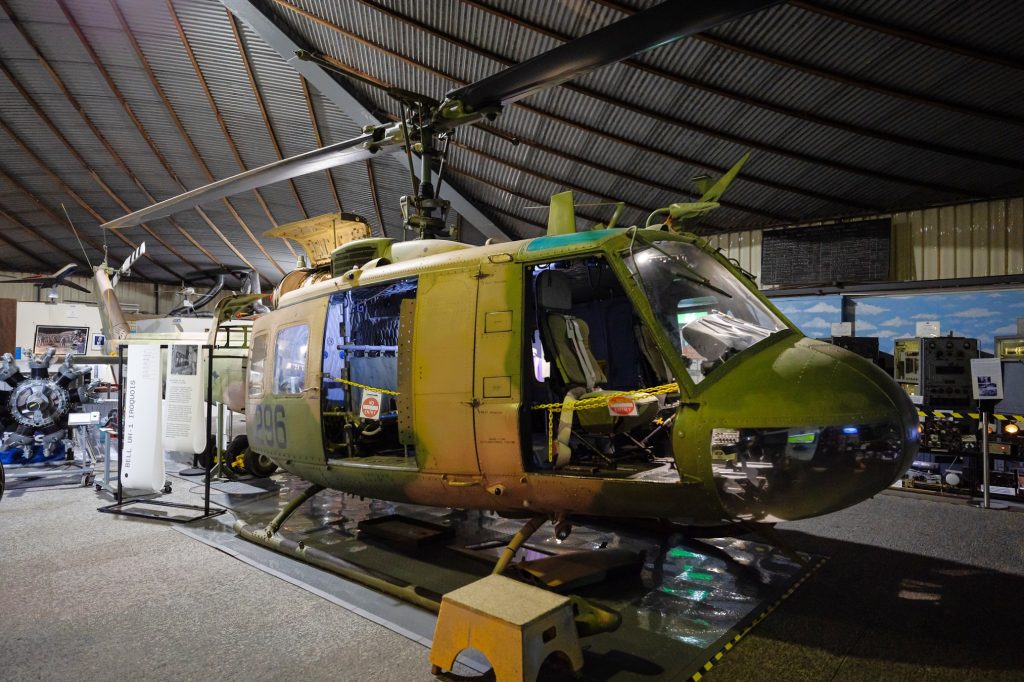
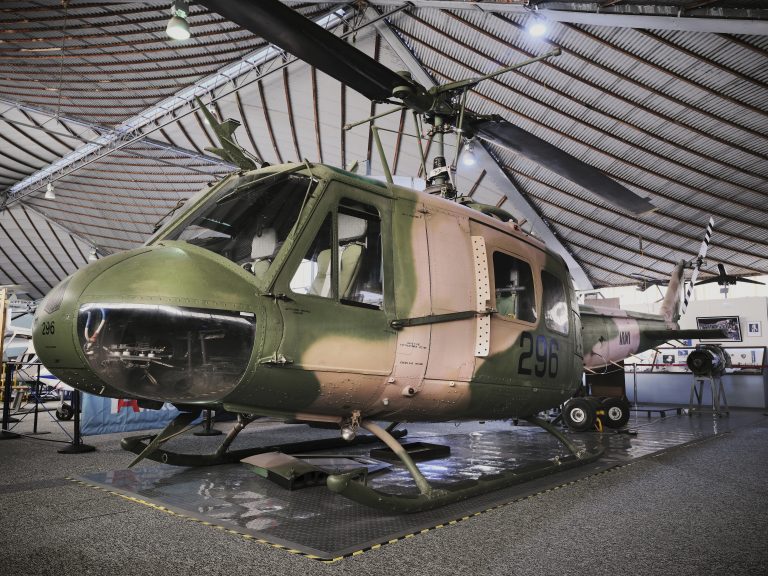
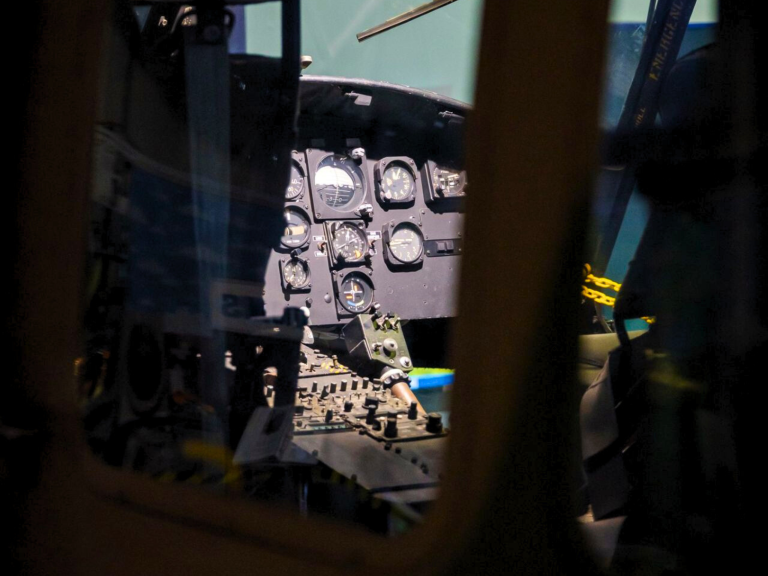
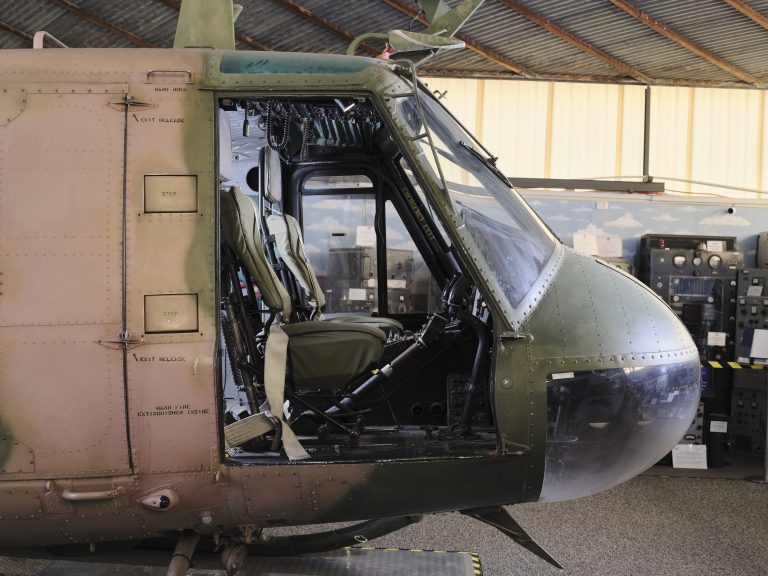
The Bell UH-1H Iroquois in Perth at the Aviation Heritage Museum is a preserved aircraft with a real Australian service record. Known as A2-296, this Huey helicopter is presented in its original Royal Australian Air Force colours and markings, offering visitors a rare chance to stand beside an aircraft that once flew missions across the country.
Located in the Southern Hangar, the UH Huey helicopter exhibit sits near other iconic aircraft like the Macchi jet trainer — a fitting nod to the twin RAAF engineers who helped shape both displays. While the Huey Bell cockpit is closed to entry, the aircraft’s full-scale profile and detailed backstory signage make it a powerful and historically grounded experience.
Visiting Information & Exhibit Highlights
The Aviation Heritage Museum is located in Bull Creek, Western Australia, and is open daily with free parking available. Visitors are encouraged to check the official museum website for the latest opening hours, ticket prices and group booking options.
Plan your visit to see the Huey alongside legendary aircraft like the Lancaster, Catalina, Spitfire, Avro Anson and Dakota. With guided tours available and dozens of exhibits on site, it’s the perfect destination for aviation enthusiasts and curious minds alike.
Frequently Asked Questions
What is the Bell UH-1H Iroquois used for?
The Bell UH-1H Iroquois was designed for battlefield mobility, medical evacuation, and search and rescue missions. In both Australian and global contexts, it served as a reliable platform for transporting troops, delivering supplies and extracting casualties under fire.
Why is the Huey helicopter so famous?
The Huey helicopter became iconic during the Vietnam War, where its distinct “thump” of rotor blades was often the first and last sound soldiers heard in combat. It earned legendary status for medevac heroism and later appeared widely in films, documentaries and military history.
How much fuel does a Huey Iroquois hold?
A standard Bell UH-1H Huey Iroquois holds approximately 820 litres of fuel, which enables a range of over 500 kilometres. This capacity made it well-suited for long patrols, cross-country training flights and emergency response across Australia’s wide terrain.
What helicopter replaced the UH-1 Huey?
In Australian service, the UH-1 Huey was gradually replaced by the MRH-90 Taipan and the S-70 Black Hawk. These newer helicopters offered advanced avionics, greater payload capacity and improved survivability for modern defence missions.